Tuesday, 26 June 2018

3 Killer Stationary Bike Workouts

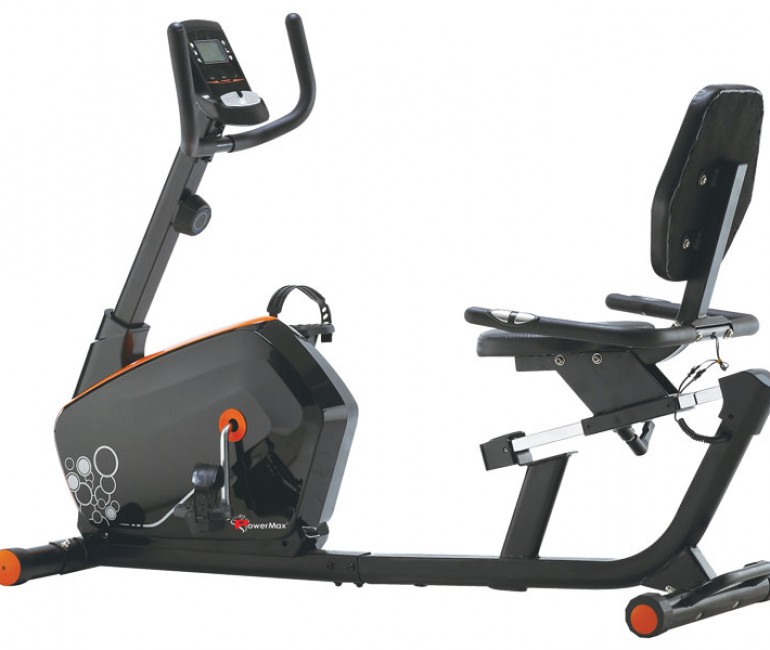
BR-600 Magnetic Recumbent Bike
1. The Tabata Takedown
Do 20 seconds of high-intensity pedaling (“an all-out sprint,” says Henderson), then rest for 10 seconds; repeat for 10 reps—that’s the first set. Rest three to five minutes—“so you’ve recuperated enough to put in the desired intensity”—then repeat for two more sets.
2. The Max-Heart Kick-Start
Instead of short bursts of speed, in this workout you’ll cycle for two minutes at moderately high intensity, rest for three minutes, then repeat this for eight reps. “Your goal is to get up to near max heart rate by the end of each interval,” Henderson says. “And it takes a good 60-90 seconds to elevate it to that level.”
3. The Agony Invitational
This 36-minute “ladder workout” is perfect for the dude who loves pain: Go as fast and hard as you can and maintain for 15 minutes, then rest for three. Go full speed again for 10 minutes, rest for three. Finally, go for five minutes with whatever you have left in the tank. Good luck—it won’t be much.

Monday, 25 June 2018

7 Hip Slimming Exercises To Do Right Now

Butt-shaping strength exercises: the plan

Warm-up

Begin with 5 minutes of low intensity cardio, such as brisk walking or marching in place.

Workout schedule

Do this workout every other day as part of your exercise program.

 How much weight to use

The amount of weight you use would depend on your personal fitness level. Add on or increase weights as you progress into the exercise routine.

Sets/reps


Do 2-sets of16-reps.

The Steps

Squats

Stand with your feet hip-width apart and knees slightly bent; and hold dumbbells in your hands. Keep your back in a neutral position and bend your knees to about 90-degrees, make sure your knees do not go over your toes. Return to starting position.

Power Lunge

Stand with your feet hip-width apart and hold dumbbells in each hand, bring one foot forward. Make sure that when go into this lunge position, both your knees are bent in line with your ankles. Return to starting position and switch legs.

Butt Bridge

Lie on your back with your feet on the floor and knees shoulder-width apart. Raise your pelvis and squeeze your hips as you lift up. Slowly return to starting position.

Step ups

Stand facing a flat bench or step that is about 8 to 10 inches high. Keeping your right foot flat on the floor, place your left foot on the centre of the bench. Do alternate knee-lifts using the step.

Saturday, 23 June 2018

9 Best Cardio Exercises For Bad Knees


Are bad knees obstructing you from practicing cardio routine? Achy joints and badly hurting ankles or knees can prove to be a major hindrance when it comes to following the daily cardio schedule. However, you can continue with a good cardiovascular workout by following some of the easiest cardio exercises that do not put strain on your joints.


Special Exercises In Cardio For Bad Knees

You can try out specially designed cardio exercises that increase your endurance so that even during an ankle or knee injury, you can continue with the workout session. These workouts help you to develop core strength, build muscle and shape as well as sculpt your body the way you have always wanted. These are performed in a circuit-style followed by a kick core finisher workout that ends up by tearing up the muscles and creating a fit and fab body.

Swimming

Swimming is an incredible form of cardio exercise, especially if you want to burn more calories in a shorter time. It burns calories almost equal to what you would burn on a run. However, swimming offers better and a variety of options to make your heart pump faster

Rowing Machine

One of the most under-utilized cardio equipment is the rowing machine. Everyone is mostly interested in a complete body workout, whereas rowing machine is especially dedicated to the upper body. It is a great exercise for toning up arms, shoulders, and a better option when your legs or joints are hurting. The legs provide a low-impact support when you are performing the rowing action. So, the lower limbs also get to move and exercise, albeit without putting any strain on the joints.

Circuit Weight Training

This type of weight training builds up the mass of the muscles, increases the heart rate with back-to-back moves, and ensures faster cardiovascular activity

Elliptical

Elliptical is nothing but a low impact cardio for bad knees that is almost similar to running. While performing the exercise, you need to make use of both the legs and the arms for power. However, it does not put a strain on your ankle and knee joints and hence can be safely performed even with a burning knee

Yoga And Pilates

Lately, you come across different forms of yoga including regular yoga, Ashtanga yoga, power yoga and a lot more. However, few of the yogic postures are extremely helpful in developing core and upper body strength. Alternating these and other relaxing yoga forms with Pilates routines can help you reach the desired level of cardiovascular activity.

Biking

Biking can be performed outdoors as well as indoors. It is indeed a challenging workout, but it does not put much strain on your ankles or knees. Many doctors even recommend cycling occasionally to retain the flexibility of the joints and to reduce pain in the knees. Depending upon your strength, you can use a stationary bike or even climb a small hill for increasing heart rate.


9 Warmup and Cooldown Mistakes Wrecking Your Workout


Skipping Your Warmup

Avoiding your warmup altogether may be tempting, especially if you’re trying to save time. But that can do more harm than good. A good warmup focuses on range-of-motion exercises, active movement and balance activities that will effectively prep your body for working out

Starting Off With Too Much Intensity  

Slow and steady wins the race! A solid warmup should essentially mimic what you plan on doing in the main portion of your workout, but at a much lighter and gentler pace

Doing Static Stretches First

Stretching is vital when it comes to working out, but only when it’s the right kind of stretching! Applying static stretches (holding a stretch for 30 seconds or more) during a warmup has been shown to actually be detrimental to athletic performance.

Not Warming Up Long Enough

Most of us have been guilty of it at some point: two minutes on the treadmill and we’re done with our warmup! But the American Heart Association says that an effective warmup should last between five and 10 minutes. The more intense the activity, the longer you should warm up. Your muscles need adequate time to circulate the blood, loosen up and prepare for the intensity to come

Performing the Same Warmup for Every Workout

Unless you’re doing the same workout day in and day out, your warmups are going to need some adjusting! You’re targeting different muscles with each workout, so focusing on your upper body, lower body or full body all require a specific routine.

Stopping Your Workout Suddenly

The main goal of a cooldown is to lower your core temperature and heart rate and to start preparing your muscles for recovery. But that’s harder to do if you immediately plunk down on the mat for some stretches or ride the feel-good hormones and keep going at a vigorous pace


Friday, 22 June 2018

The best workout routine to reduce stomach bloating

Workout routine to reduce bloating

“The easiest way to prevent bloating is to ensure that you eat food slowly, and in small portions. If you’re still battling the belly bloat, these exercises can be of help,” advises the Mumbai-based celebrity fitness trainer.

Cardio workout routine to beat bloating

Whether you’re at the gym or you’re outdoors for a workout, some quick cardio can help your body feel toned again after a heavy meal. If you’re not near any fitness equipment, go back to the basics and follow some easy aerobic exercises, or opt for a quick run outside and take the stairs on your way back. If you have a gym in your proximity, opt for the following workout:
  1. 10 minutes on the treadmill
  2. 10 minutes on the elliptical
  3. 10 minutes on the cycle

Functional training

Try any combination of the following workouts for 30 seconds with a rest of 10 seconds in between, eventually repeating the entire cycle five to six times.

Jumping jacks


Begin with your feet together and your hands resting by your sides. Raise your hands towards your head while simultaneously jumping with your feet apart, and repeat the movement in quick succession.

Mountain climbers


Start out with your body in a full plank position and do the motions of a traditional mountain climber by bringing your knees to your chest. Repeat as quickly as possible for 30 seconds.


Exercises You Can Do Now to Save Your Knees Later

Don’t wait until you’re hobbled to actively protect your knees
Pop a squat – or 10
Indelicate squat discussion first. “You’re going to be doing that kind of loading on the knee joint just to get on and off the toilet,” says Neal Pire, a certified health coach and exercise physiologist in the New York City metro area. He emphasizes it’s important to do exercises that prepare the knee for regular day-to-day activities. 
Lunge for long-term knee health
Like squats, lunges can also be an excellent exercise to improve strength in your quads and butt to help support your knees, says Dr. Jeremy Close, a sports medicine physician with Rothman Institute at Thomas Jefferson University Hospital and director of the sports medicine fellowship at the Philadelphia-based university
Step-up your game
Whether you’re familiar with step-ups or not, you get the general idea. “You’re lifting your body weight using one hip, one leg to get that weight up – like you would going up the stairs,” says Pire, who is a fellow of the American College of Sports Medicine. "Keeping the hip joint muscles strong and well-conditioned along with muscles around the ankle strong and well-conditioned will help minimize the risk of injury at the knee joint," he says
Strengthen your core
A weak back and stomach can put extra stress on the joints that support your body. "A good core strengthening program is important and paramount to the health of your knees, hips and lower extremities – so [do] a lot of abdominal exercises and lower back exercises,” says Siffri, who is chief of sports medicine at Greenville Health System in Greenville, South Carolina.
Go bipedal.
Running has taken a pounding for the pounding it can take on the knees. But for most, Close says, it’s a safe activity. “I think running is a great activity. It’s easy to do. It’s low cost. We’re all designed to run for the most part,“ he says. “It’s just being smart about what you can tolerate.” 
Take a joint ride.
Whether you're biking with friends or riding alone, racing the clock or just catching a cool breeze, taking to two wheels can strengthen your squads and calves and improve overall leg strength to bolster knee health. Cycling is also a low-impact activity, Close says.
Get elliptical, elliptical.
Though many do just fine running on a treadmill, Siffri recommends alternatively trying an elliptical machine for an aerobic workout that works the legs while being easy on the knees. "Your foot is planted against a platform – so there’s not that repetitive impact that can also lead to degradation of cartilage over time," he says.

Tuesday, 19 June 2018

5 Summer Workout Tips

1. Drink More "Fun" Water

It's important to drink plenty of water, especially in the summer when you're more prone to dehydration and you're sweating more during your workouts. I like to make infused-water "mocktails" to make plain water more delicious without the added calories of other drinks

2. Find a Workout Buddy

Some of my favorite buddy workouts during the summer include biking, outdoor dance classes, canoeing/kayaking and, of course, hiking — even better with a healthy picnic at the end! You get to spend a beautiful day outdoors with a friend, and you won't even notice the amazing workout you're getting.


3. Work Out in the Morning

Getting up first think in the morning to fit in a sweat session is a great way to jump-start your day, plus you'll avoid the peak summer sun. If you have trouble waking up and getting to the gym, try leaving yourself a motivational sticky note on your sneakers and putting them by your bed. Once you get into the routine, you'll be able to stick with it into fall and winter.

4. Try Online Training

Online training is one of the most convenient ways to work out — without any excuses. All you need is a laptop and an Internet connection (maybe not even that if you download the workouts beforehand). 

5. Fuel Up Beforehand

5. Fuel Up Beforehand

I always tell my clients to eat a small meal or snack at least 90 minutes before any workout to ensure they have the best levels of energy.

Source
https://www.livestrong.com/slideshow/13713051-5-summer-workout-tips/#slide=6